Skip to content


Why Do Possums Move Into Sydney Roofs During Winter?
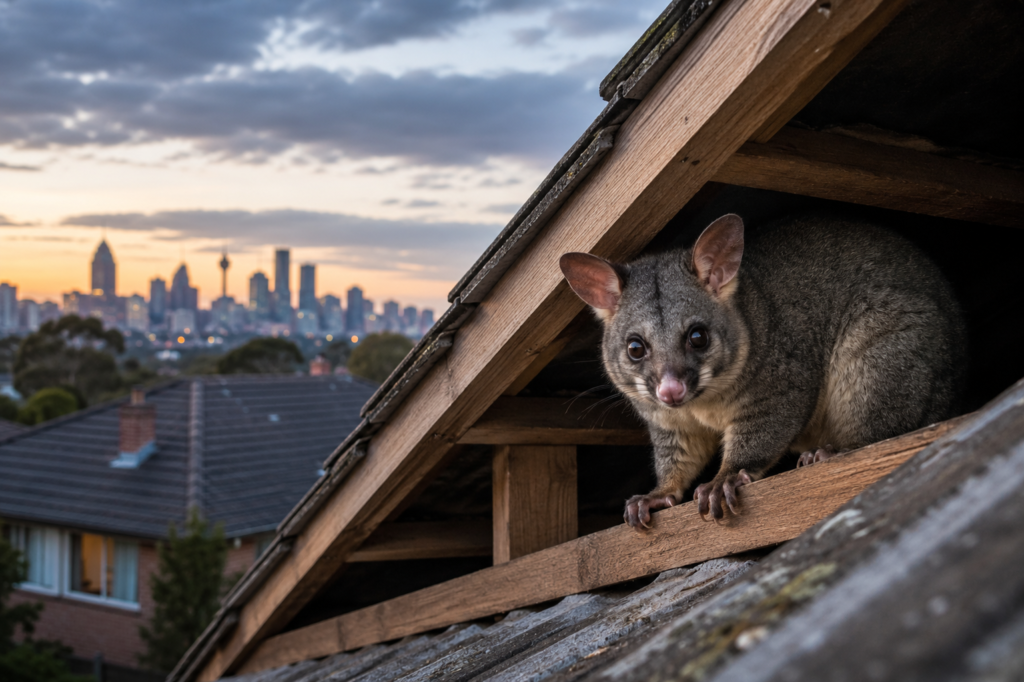
As winter arrives in Sydney, many homeowners begin hearing scratching, thumping or heavy footsteps coming from their ceilings after dark. In many cases, these noises are caused by a possum that has found its way into the roof cavity in search of warmth and shelter.
Roofs provide an ideal place for possums to escape cold weather, stay dry and rest safely during the day before venturing out to feed at night. If you’ve noticed unusual activity in your roof this winter, understanding why possums choose roof spaces can help you take the right steps to protect your home while ensuring the animals are managed lawfully and humanely.
Why Are Possums More Likely to Enter Roofs During Winter?
Possums do not hibernate, so they remain active throughout the colder months. However, winter encourages them to seek warmer, more protected places to sleep during the day. In natural bushland, possums usually shelter inside tree hollows. Across many Sydney suburbs, however, urban development has reduced the number of mature trees with suitable hollows. As a result, roof cavities have become an attractive alternative because they offer many of the same benefits. A roof space provides warmth, protection from rain and wind, and a secure place away from predators. Once a possum discovers an easy way inside, it may continue returning if the access point remains open.
Why Do Roof Cavities Appeal to Possums?
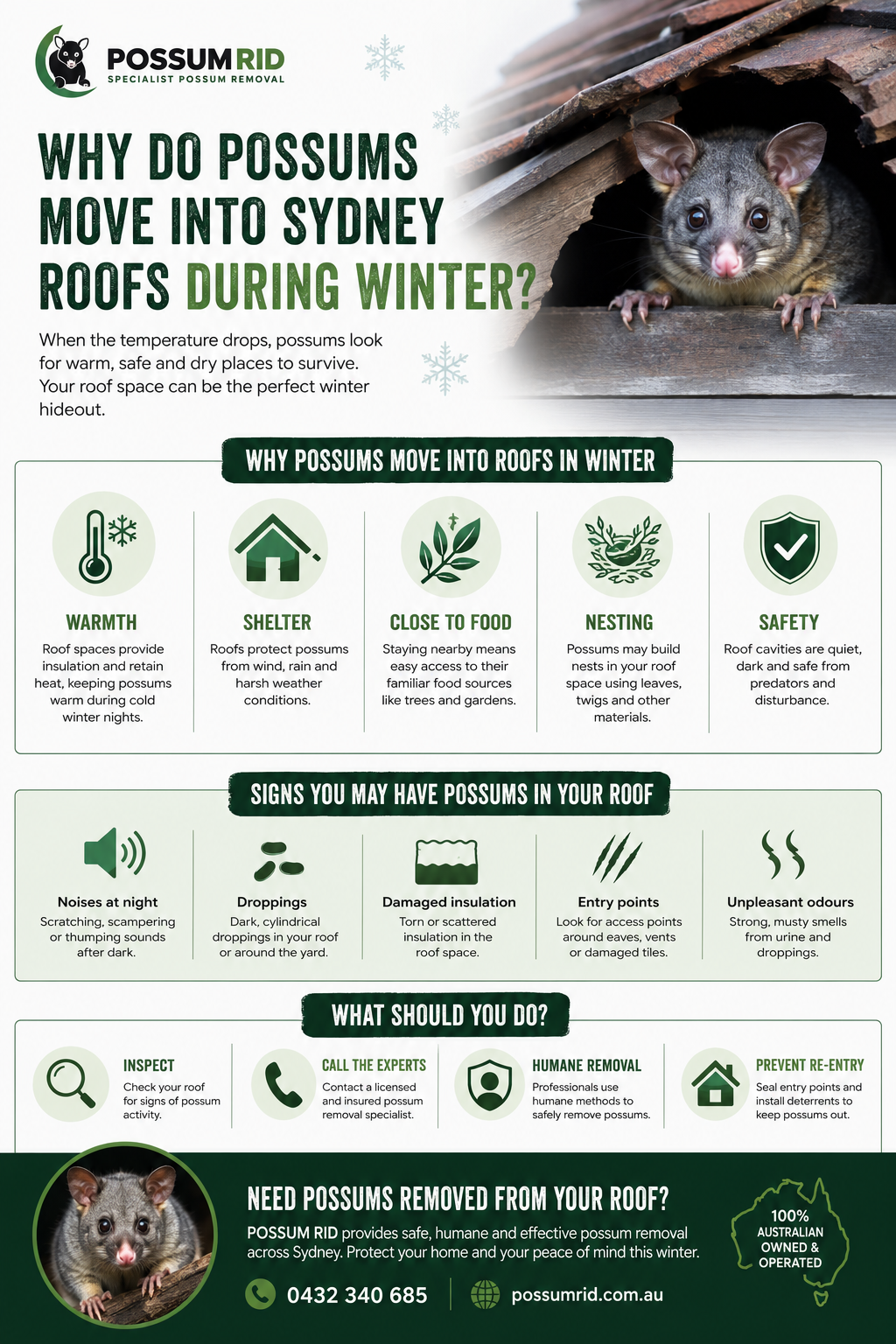
Roof spaces closely resemble the natural shelters possums prefer in the wild. Heat naturally rises from the rooms below, making roof cavities noticeably warmer than the outside environment, and during Sydney’s colder nights this warmth helps possums conserve energy while they rest. For an animal that sleeps during the day before becoming active after sunset, a warm roof cavity is an ideal refuge.
Winter weather also brings cold winds and rain, and a roof offers excellent protection from these changing conditions, allowing possums to stay dry and comfortable throughout the day. Unlike exposed tree branches, roof cavities provide a stable environment regardless of the weather outside. Possums also naturally seek enclosed spaces where they feel secure, and female brushtail possums may use sheltered areas while raising their young — roof cavities offer the same quiet, undisturbed conditions as a natural tree hollow.
On top of this, Sydney’s suburbs provide an abundance of food sources, including native trees, flowering gardens and fruiting plants. When food and shelter are located close together, possums have little reason to move elsewhere.
Which Possums Usually Live in Sydney Roofs?
The species most commonly found inside Sydney homes is the Common Brushtail Possum (Trichosurus vulpecula). Brushtail possums have adapted extremely well to suburban living — they are nocturnal, excellent climbers, territorial, and comfortable living close to people, which makes them the possum most frequently found in residential roof spaces. Ringtail possums also occur throughout Sydney, but they usually prefer building nests, known as dreys, in dense vegetation rather than occupying roof cavities.
How Do Possums Get Into Roof Spaces?
Possums are agile climbers and only need a relatively small opening to enter a roof. Some of the most common entry points include:
- Broken roof tiles – storm damage or ageing roofs can leave gaps large enough for possums to squeeze through.
- Damaged eaves – loose or deteriorated eaves often provide easy access into roof cavities.
- Roof vents – poorly protected ventilation openings may allow possums to enter if they are large enough.
- Overhanging tree branches – branches that touch or overhang the roofline act like natural bridges, making it easy for possums to climb onto the roof.
- Deteriorated building materials – weathered fascia boards, loose flashing and ageing roofing materials can gradually create new access points if maintenance is neglected.
If you’re curious about how possums gain access to homes, our guide How Do Possums Get Into Roofs? Common Entry Points in Sydney Homes explains the most common entry points found across Sydney properties.
What Signs Suggest a Possum Has Moved Into Your Roof?
Many homeowners first become aware of possums because of the sounds they hear after dark. Common signs include:
- Heavy footsteps – possums are much larger than rats or mice, and their movements often sound like slow, heavy footsteps moving across the ceiling.
- Scratching and thumping – usually caused by possums climbing through roof spaces or moving around entry points, with occasional loud thumps as they jump between roof timbers.
- Activity after sunset – possums generally leave their shelter shortly after dusk to search for food before returning before sunrise.
- Unpleasant odours – if a possum remains inside a roof for an extended period, urine and droppings may create noticeable smells.
- Visible entry points – scuff marks, droppings or damaged roofing materials near an opening may indicate regular possum activity.
If you’re unsure whether these noises are being caused by a possum, read What Are the Signs You Have a Possum Living in Your Roof? for a more detailed explanation of the warning signs homeowners commonly notice. It’s also worth ruling out other pests — our article Possum or Rat in the Roof: How Can You Tell the Difference? explains how to tell the two apart.
Can Possums Damage Your Roof?
Possums generally do not intend to damage homes, but their presence can create practical problems over time. Urine and droppings can contaminate and flatten insulation, flexible ducting can be damaged, and minor wear can develop around roof entry points, alongside the ongoing disturbance of noise at night. Most of this damage develops gradually if possums continue using the roof as a nesting site.
For a closer look at the kinds of damage possums can cause, our article Can Possums Damage Your Roof, Insulation or Electrical Wiring? covers this in more detail.
Is It Legal to Remove a Possum Yourself?
No. Possums are protected native animals in New South Wales. Under the Biodiversity Conservation Act 2016 (NSW), possums cannot be harmed or relocated without complying with NSW wildlife laws. If a possum needs to be removed from a roof, the work must be carried out in accordance with current NSW Government requirements, which are designed to protect native wildlife while allowing homeowners to manage genuine nuisance situations. Because these legal requirements can be complex, homeowners should avoid attempting to trap or relocate possums themselves.
If you would like to understand the legal obligations in more detail, our article Can You Legally Remove a Possum From Your Roof in NSW? explains what Sydney homeowners need to know. You may also want to read How Are Possums Removed From a Roof Without Harming Them? to understand what a lawful, humane removal actually involves.
What Should You Do If You Hear a Possum in Your Roof?
If you suspect a possum has entered your roof this winter, avoid making quick decisions that could accidentally trap or harm the animal. Start by observing when the noise occurs, since possums are usually active after sunset and before sunrise, and recording this pattern can help confirm what’s responsible. From ground level, check for obvious entry points such as broken roof tiles, damaged eaves, or tree branches touching the roof, but avoid blocking any entry point immediately, as this may trap the possum inside and create further problems. The best next step is to arrange a professional inspection, where a licensed possum removal specialist can identify the entry point, determine whether young are present, and recommend a lawful, humane solution.
If the noises are keeping you awake, our guide What Should You Do If You Hear a Possum in Your Roof at Night? explains the recommended first steps before arranging professional assistance. If you’re weighing up the cost of getting help, How Much Does Possum Removal Cost in Sydney? is a useful place to start.
How Can You Reduce the Chances of Possums Moving Into Your Roof?
Preventative maintenance is the most effective way to reduce the likelihood of possums using your roof during winter. Trimming tree branches away from the roofline, replacing broken roof tiles, repairing damaged eaves and fascia boards, and securing roof vents where appropriate all help close off potential access points. It’s also worth inspecting the roof after storms and arranging professional possum-proofing once any lawful removal has been completed.
Once a possum has been removed, preventing it from returning is equally important. Our guide How Can You Stop Possums From Returning to Your Roof? provides practical tips for making your home less attractive to future visitors.
Frequently Asked Questions
Do possums only enter roofs during winter?
No. Possums can use roof spaces throughout the year, but winter often increases demand for warm, sheltered resting places.
Will a possum leave on its own?
Sometimes. However, if the roof provides warmth and easy access, the possum may continue returning.
Should I block the hole once the possum leaves?
Only after you’re certain the possum has permanently left, and any lawful exclusion process has been completed. Blocking access too early can trap a protected animal inside.
Can possums survive winter outdoors?
Yes. Possums naturally live outdoors, but they actively seek warm, sheltered places to rest during colder weather.
Contact Possum Rid for Professional Possum Removal
If you’ve noticed scratching, thumping, or heavy footsteps coming from your roof this winter, don’t ignore the signs. Early action can help prevent ongoing problems while ensuring the possum is managed safely and in accordance with NSW wildlife laws.
Possum Rid provides professional, humane possum removal and possum-proofing services throughout Sydney. Whether you need an inspection, lawful possum removal or advice on preventing future roof visits, our experienced team is here to help. Learn more about our Possum Removal Sydney service or Contact Possum Rid today to arrange a professional inspection.