Skip to content


How Do Possums Get Into Roofs? Common Entry Points in Sydney Homes
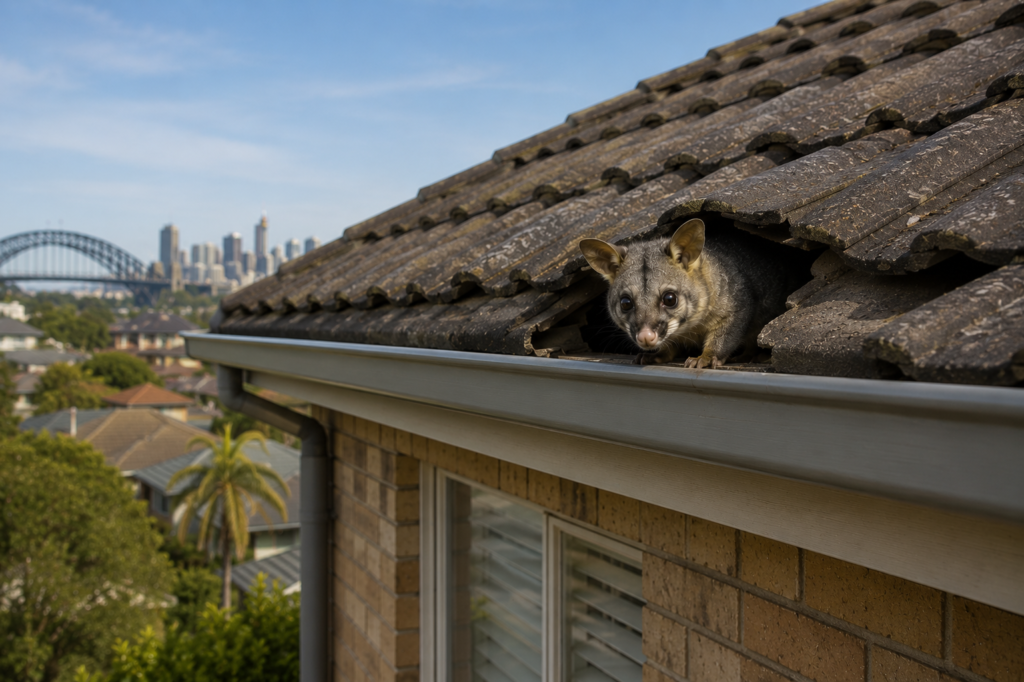
If you’ve discovered a possum living in your roof, one of the first questions you’re likely to ask is, “How did it get in?” While roofs may seem well sealed from the ground, most homes have small gaps or weak points that provide surprisingly easy access for a determined possum.
Brushtail possums are excellent climbers and are well adapted to suburban environments. They can scale fences, trees, downpipes and brick walls before squeezing through openings that many homeowners never notice. Understanding where possums commonly enter your roof is the first step towards preventing repeat visits.
Why Do Possums Look for Roof Spaces?
Possums naturally live in tree hollows, but these have become less common in many parts of Sydney as suburbs have developed. Roof cavities offer a similar environment by providing warmth, shelter from the weather and a safe place to sleep during the day. This is especially noticeable during winter, when roof spaces become much more appealing than exposed outdoor nesting sites. If you’ve noticed possum activity increasing during the colder months, our article Why Do Possums Move Into Sydney Roofs During Winter? explains why roofs become one of their favourite places to shelter.
How Good Are Possums at Climbing?
Many homeowners underestimate just how agile possums are. A brushtail possum can scale brick walls, timber fences and tree trunks with ease, and is just as comfortable climbing a downpipe, pergola or lattice screen.
Roof gutters pose no obstacle either, and once a possum reaches the roofline, it only needs a small opening to gain access to the cavity below. This climbing ability means that even homes without large trees nearby can still experience possum problems.
What Are the Most Common Roof Entry Points?
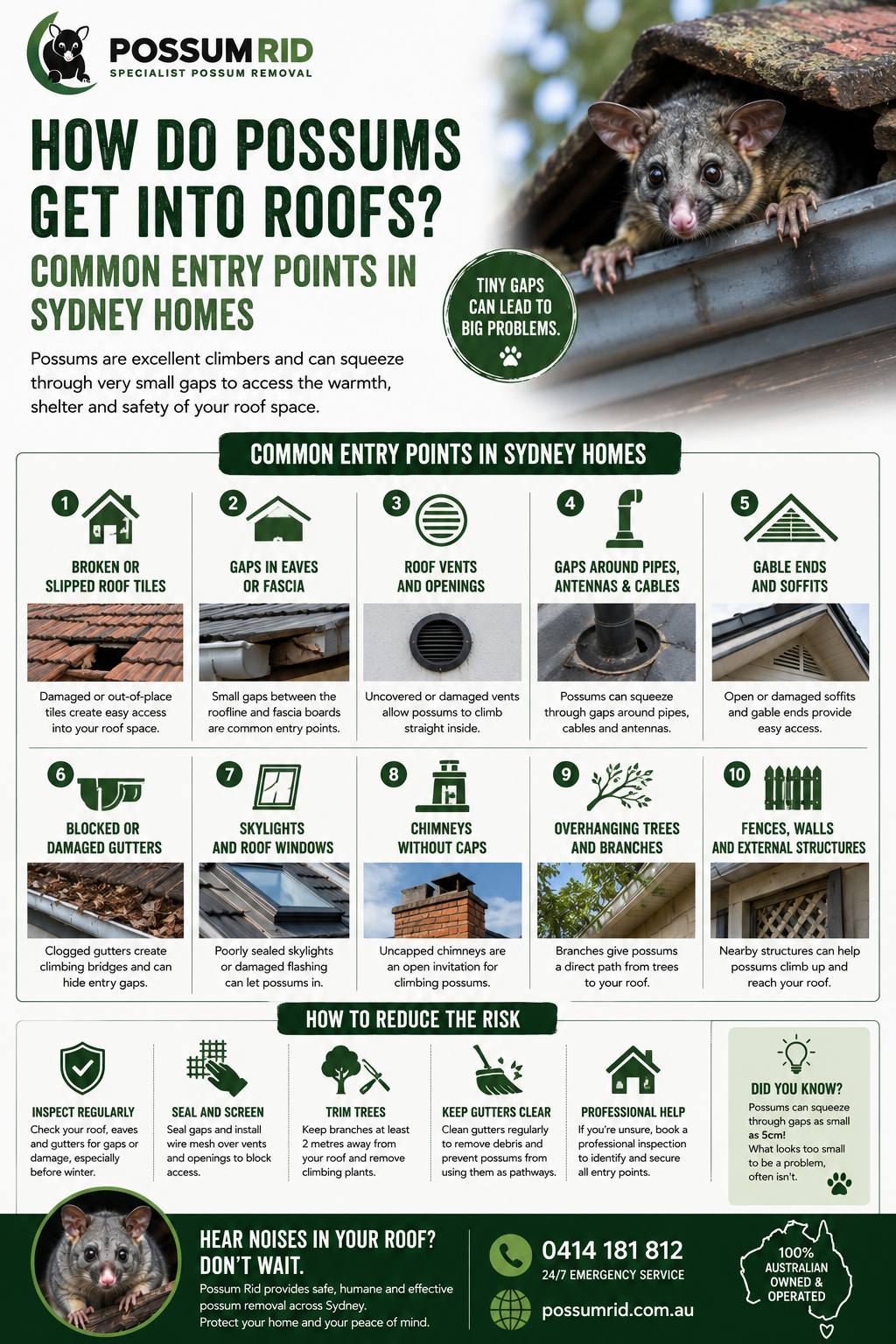
While every property is different, professional inspections often identify the same types of access points:
- Broken or dislodged roof tiles – tiles naturally shift over time due to weather, ageing and storm damage, and a cracked or slightly raised tile may create enough space for a possum to squeeze inside. Many homeowners never notice these small gaps because they’re difficult to see from ground level.
- Gaps around the eaves – ageing materials or poor maintenance can create openings around the edges of eaves, and loose panels or deteriorated timber can provide easy access into roof spaces.
- Damaged fascia boards – fascia boards support the edge of the roof and gutters, and as timber ages or becomes weather damaged, gaps may develop between the fascia and roofing materials.
- Roof vents – ventilation is important for airflow, but vents that are damaged or inadequately protected can allow possums to enter.
- Gaps around flashing – flashing helps seal joins around chimneys, skylights and roof intersections, and over time it can loosen or deteriorate, leaving small openings that wildlife may use.
Regular roof inspections can help identify these issues before wildlife takes advantage of them.
Do Overhanging Trees and Gutters Help Possums Reach Your Roof?
Yes to both. Tree branches that extend over or touch your roof effectively act as bridges, and native trees, ornamental trees, and even large shrubs can provide easy access if they grow close enough to the roofline. While trimming branches doesn’t guarantee possums won’t return, reducing easy access can make your home much less attractive.
Gutters can help too, once a possum has reached the roof by climbing a downpipe, nearby tree, fence post or pergola — from there, gutters provide a convenient route around the roof until an entry point is located. Keeping gutters clean won’t necessarily prevent possums, but maintaining your roof helps make inspections easier and allows damaged areas to be identified sooner. After a possum has been lawfully removed, our guide How Can You Stop Possums From Returning to Your Roof? explains other practical maintenance steps that can help reduce future visits.
Can Older Homes Be More Vulnerable?
Older homes often develop small gaps as building materials naturally age, including loose roof tiles, warped timber, weathered fascia boards, deteriorated eaves and worn flashing. However, newer homes aren’t immune — storm damage, building movement and poor maintenance can create entry points regardless of a property’s age.
What Signs Suggest a Possum Is Using a Particular Entry Point?
You may notice evidence around the outside of your home before you ever see the possum. Dark scuff marks can appear around roof edges or entry holes from repeated climbing, and occasionally small tufts of fur become caught on rough roofing materials. Droppings may collect beneath regular access points, and if scratching or thumping consistently comes from the same section of the roof, the nearby exterior may reveal the possum’s preferred entry point.
If you’re still unsure whether the noises are actually being caused by a possum, our guide What Are the Signs You Have a Possum Living in Your Roof? explains the most common indicators Sydney homeowners should look for.
Should You Seal the Entry Hole Yourself?
Not immediately. One of the biggest mistakes homeowners make is sealing an opening as soon as they discover where the possum is entering. If the possum is still inside the roof, blocking its exit can trap the animal, separate a mother from her young, or cause further damage as the possum searches for another escape route. Entry points should only be sealed after it’s confirmed that the possum has safely left and any lawful exclusion process has been completed.
If you’ve recently started hearing noises at night, our article What Should You Do If You Hear a Possum in Your Roof at Night? explains the safest first steps to take.
Why Professional Inspections Matter
Many possum entry points are surprisingly difficult to spot from the ground. A professional inspection can identify hidden access points, signs of repeated activity, roof damage requiring repair, whether more than one possum is present, and areas that may need possum-proofing. Professionals also understand NSW wildlife regulations and can recommend lawful solutions that protect both your property and the animals.
How Are Entry Points Permanently Prevented?
Once the possum has been removed or excluded in accordance with NSW requirements, preventing future access becomes the priority. This typically involves repairing roof damage such as broken tiles, damaged flashing and loose eaves, trimming trees to reduce easy access from overhanging branches, protecting roof vents while maintaining airflow, and replacing deteriorated fascia boards or weather-damaged timber. In some cases, additional professional possum-proofing may be recommended depending on the property’s design and previous activity.
Understanding how professionals complete this process can be helpful. Our article How Are Possums Removed From a Roof Without Harming Them? explains the general removal and exclusion process used to manage possums safely and lawfully.
Are Possums the Only Animals That Use Roof Entry Points?
No. The same openings that allow possums inside may also be used by rats, mice, birds and occasionally other native wildlife. Because different animals require different management approaches, correctly identifying the species is important. If you’re unsure what you’re hearing overhead, Possum or Rat in the Roof: How Can You Tell the Difference? compares the signs homeowners commonly notice.
Frequently Asked Questions
Can a possum squeeze through a small gap?
Yes. Possums are surprisingly flexible and can enter through openings that appear too small from the ground.
Will trimming tree branches solve the problem?
Trimming branches helps reduce access but usually won’t solve the problem if existing roof entry points remain open.
Do possums damage roofs to get inside?
Usually not. Possums generally take advantage of existing gaps or damaged areas rather than creating new openings themselves.
Should I repair the roof before the possum is removed?
It’s usually best to wait until the possum has been lawfully removed or excluded. Repairing access points too early may trap the animal inside.
Contact Possum Rid for Professional Possum Removal
If you think a possum has found its way into your roof, identifying the entry point is only part of the solution. It’s equally important to ensure the possum is managed humanely and in accordance with NSW wildlife laws before any repairs are carried out.
Possum Rid provides professional possum removal and possum-proofing services throughout Sydney. Our experienced team can inspect your roof, locate entry points, recommend appropriate repairs and help reduce the likelihood of future possum activity. Learn more about our Possum Removal Sydney service or Contact Possum Rid today to arrange a professional inspection.