Skip to content


How Can You Stop Possums From Returning to Your Roof?
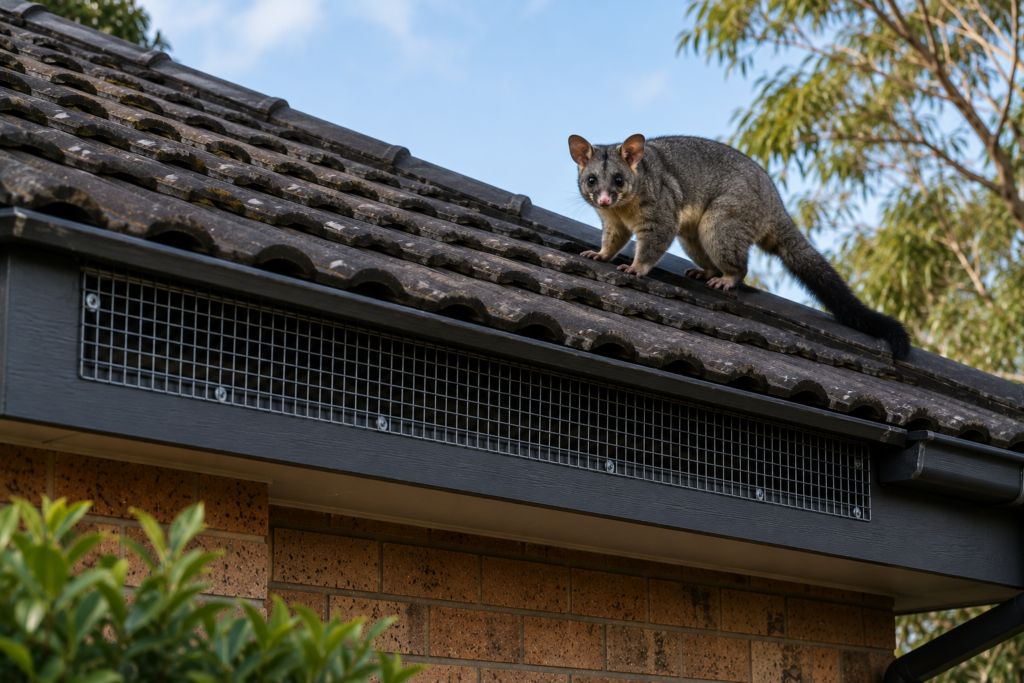
After a possum has been removed from your roof, the next priority is making sure it doesn’t come back. Many Sydney homeowners assume that once the animal has gone, the problem is solved. Unfortunately, if the original entry point remains open, there’s a good chance the same possum — or another one — will eventually find its way back inside.
The most effective way to prevent repeat possum activity is to combine lawful possum removal with good roof maintenance and possum-proofing. By addressing how the possum gained access in the first place, you can significantly reduce the likelihood of future visits while continuing to comply with NSW wildlife laws.
Why Do Possums Return to the Same Roof?
Brushtail possums are territorial animals that become familiar with their surroundings. If they find a warm, dry and secure place to rest during the day, they often return to it regularly. If access to your roof remains unchanged after removal, the possum may simply continue using the same entry point. This is why professional possum removal doesn’t end when the possum leaves — preventing re-entry is an essential part of achieving a long-term solution.
Repair Roof Entry Points and Check Your Tiles
One of the most effective ways to stop possums returning is to repair the openings they used to enter the roof, including broken roof tiles, damaged eaves, loose fascia boards, gaps around roof vents, deteriorated flashing, or openings created by ageing building materials. Professional inspections often uncover several small access points rather than just one obvious hole. If you’re unsure where possums usually gain access, our guide How Do Possums Get Into Roofs? Common Entry Points in Sydney Homes explains the areas that should be inspected around your home.
It’s important not to rush this step, though. Blocking an entry point while a possum is still inside the roof can trap the animal, potentially causing further problems and animal welfare concerns — and if a mother possum has a dependent joey, sealing the roof too early may also separate them. Before any repairs are completed, you should be confident that the possum has safely left and that any lawful exclusion process has been finished. If you’re unsure what the removal process involves, How Are Possums Removed From a Roof Without Harming Them? explains how professionals safely manage possums before sealing roof access points.
Trim Overhanging Tree Branches
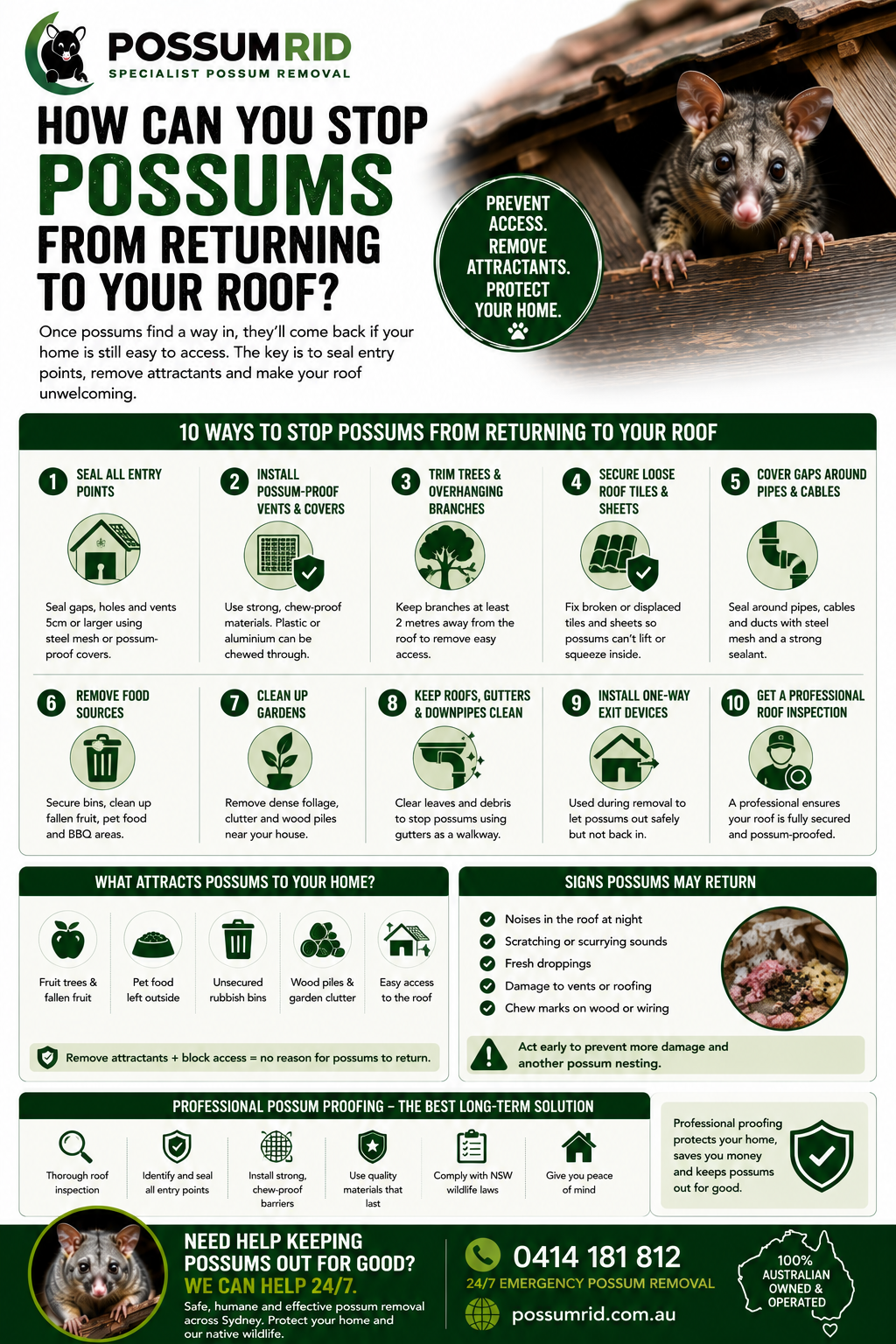
Possums are excellent climbers, and branches that touch or overhang your roof act like bridges, letting possums reach your home without much effort. Regularly trimming branches so they remain clear of the roofline can make access more difficult. This means keeping branches well clear of the roof, removing limbs that touch gutters, checking for new growth each year, and considering nearby fences, pergolas, or sheds that may also provide access. While trimming branches won’t stop every possum, it removes one of the easiest routes onto your roof.
Maintain Your Roof and Secure Vents
Routine roof maintenance is one of the best long-term strategies for preventing possum problems. At least once a year, or after major storms, it’s worth inspecting your roof for cracked or broken tiles, loose flashing, damaged eaves, deteriorated fascia boards, gaps around vents, or other loose roofing materials. Small defects often become larger over time, making them easier for possums to use as entry points.
Roof vents deserve particular attention, since they’re designed to ventilate your home but can also provide access if damaged or poorly protected. Where appropriate, professionally installed vent protection can help reduce the likelihood of possums entering while still allowing adequate airflow through the roof cavity.
Gutters are worth keeping in good condition too. While they don’t attract possums directly, they often form part of the route a possum uses when moving around a roof, and regular gutter maintenance helps you spot loose roofing materials, damaged fascia boards, broken roof edges or storm damage that needs repair — it also makes routine roof inspections easier overall.
Address Small Problems Promptly
Small roofing defects are much easier, and often less expensive, to repair than larger problems. If you notice loose tiles, minor gaps, storm damage or ageing roof materials, it’s worth arranging repairs before wildlife has the opportunity to use them, since many possum problems begin with a small opening that gradually becomes easier to access over time.
Avoid Feeding Possums, and Consider a Nest Box
Some homeowners enjoy seeing possums in their gardens and may be tempted to feed them, but this can encourage them to spend more time around your property and increase the likelihood they’ll investigate your roof for shelter. The NSW Government generally advises allowing possums to find their own natural food sources rather than providing supplementary food.
If natural tree hollows are limited in your area, installing a properly positioned possum nest box on a suitable tree may encourage possums to shelter away from your roof instead. This approach supports native wildlife while reducing the likelihood of possums choosing your roof cavity as their home.
Know the Signs of a Returning Possum
Even after possum-proofing, it’s worth staying alert for early signs of renewed activity — heavy footsteps after sunset, scratching sounds in the ceiling, thumping across roof timbers, scuff marks around roof edges, or new gaps and damaged roofing materials. The earlier you identify renewed activity, the easier it is to investigate before the possum becomes established again. If you begin hearing noises overhead, What Are the Signs You Have a Possum Living in Your Roof? explains the warning signs that often indicate a possum has returned.
What If the Possum Keeps Coming Back?
If possums continue returning despite repairs, it’s worth arranging another professional inspection, since there may be an overlooked entry point, new roof damage, another climbing route onto the roof, or more than one possum using the property. A thorough inspection can identify these issues before further possum-proofing is recommended.
Why Professional Possum-Proofing Makes a Difference
Professional possum-proofing involves much more than simply blocking visible holes. An experienced technician can inspect the entire roof, identify hidden access points, recommend repairs, assess climbing routes, and ensure exclusion work complies with NSW wildlife requirements. This comprehensive approach reduces the likelihood of repeat problems and helps protect both your home and the possums themselves.
Can You Prevent Every Possum From Visiting?
Probably not, and that’s alright. Possums are a natural part of Sydney’s environment, and it’s common to see them moving through gardens, parks and trees after dark. The goal isn’t to remove possums from the neighbourhood — it’s to make your roof a less attractive place for them to live. By maintaining your roof, repairing access points and reducing easy climbing routes, you greatly improve your chances of keeping possums where they belong: outside.
Frequently Asked Questions
Will trimming tree branches stop possums completely?
No. It makes access more difficult, but possums are excellent climbers and may still reach your roof using fences, downpipes or nearby structures.
Can possums create new holes in the roof?
Usually not. Possums generally take advantage of existing gaps or damaged sections of the roof rather than creating new openings.
How often should I inspect my roof?
A visual inspection at least once a year and after significant storms is a good way to identify minor damage before wildlife uses it as an entry point.
Is possum-proofing better than simply removing the possum?
Yes. Removing the possum without addressing how it entered the roof often results in another possum returning later.
Contact Possum Rid for Professional Possum-Proofing in Sydney
Preventing possums from returning to your roof starts with identifying how they gained access and ensuring those entry points are properly addressed. A professional inspection can help uncover hidden gaps, recommend appropriate repairs, and provide long-term solutions that comply with NSW wildlife laws.
Possum Rid provides professional possum removal and possum-proofing services throughout Sydney. Whether you’ve recently had a possum removed or want to reduce the risk of future roof visitors, our experienced team can help protect your home with practical, humane solutions. Learn more about our Possum Removal Sydney service or Contact Possum Rid today to arrange a professional inspection.