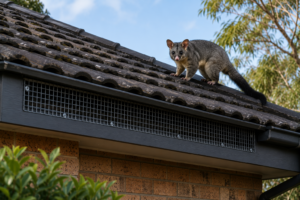
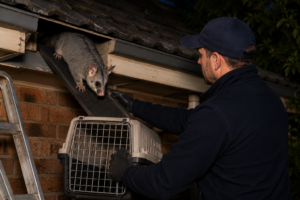
Skip to content


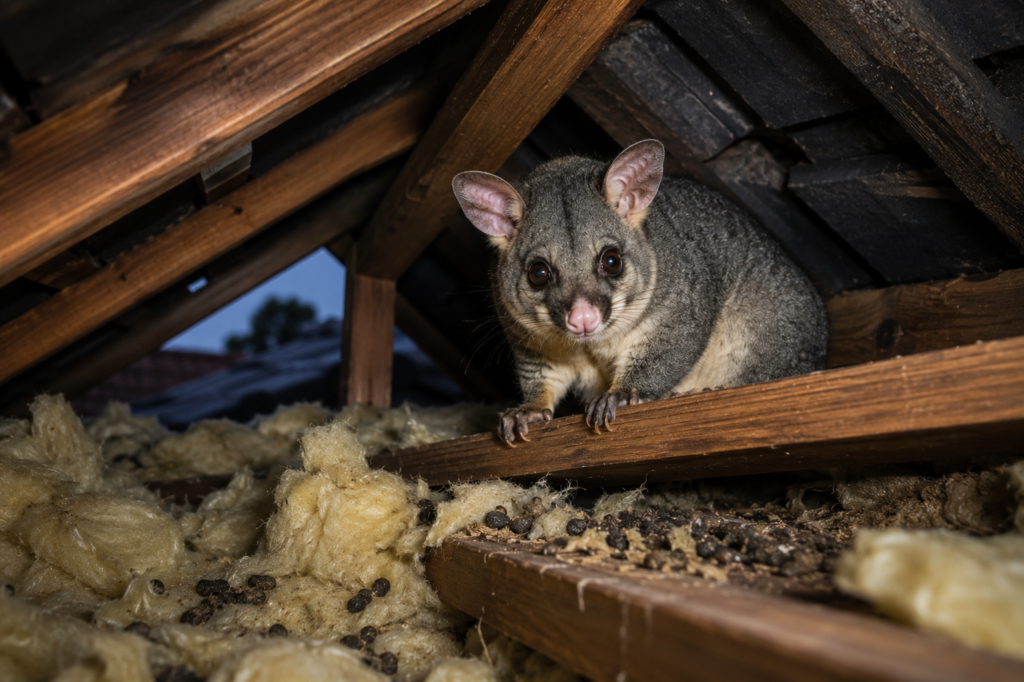
What Are the Signs You Have a Possum Living in Your Roof?
Hearing strange noises coming from your ceiling at night can be unsettling, especially during Sydney’s cooler months when possums often seek warm shelter inside roof spaces. While many homeowners assume they have rats or mice, the sounds and other warning signs can often point to a possum instead.
Recognising the signs early allows you to arrange the appropriate assistance before the problem becomes more disruptive. It also helps ensure any possum is managed lawfully, as possums are protected native animals in New South Wales.
Why Do Possums Choose Roof Spaces?
Possums naturally live in tree hollows, but as Sydney has grown, many suitable nesting sites have disappeared. Roof cavities provide a similar environment by offering warmth, shelter from the weather and protection from predators. This is particularly common during winter, when possums look for comfortable places to rest during the day. If you’re wondering why possums seem more active around homes during the colder months, our article Why Do Possums Move Into Sydney Roofs During Winter? explains why roof spaces become so attractive at this time of year.
What Does a Possum Sound Like in the Roof?
The noises possums make are often the first sign homeowners notice:
- Heavy footsteps – possums are much larger than rats or mice, so their movements tend to sound heavier, often like someone slowly walking across the ceiling. Unlike rodents, which produce quick scurrying sounds, possums move at a slower pace with more noticeable thumps.
- Scratching sounds – heard as a possum climbs across roof timbers, insulation or around its entry point, often when leaving after sunset or returning before sunrise.
- Loud thumps – possums are capable climbers and jump confidently between beams and roof structures, creating occasional loud thumping noises.
- Hissing, growling or coughing sounds – brushtail possums sometimes communicate this way, particularly if two possums are competing for territory or during breeding season.
Because possums are nocturnal, timing is another useful clue. Most activity occurs shortly after sunset when possums leave to feed, continues intermittently through the night as they move around the roof, and settles again before sunrise when they return to shelter. If the noises consistently occur during these times, there’s a good chance a possum is responsible.
If you’re hearing these sounds regularly, our guide What Should You Do If You Hear a Possum in Your Roof at Night? explains the safest next steps to take.
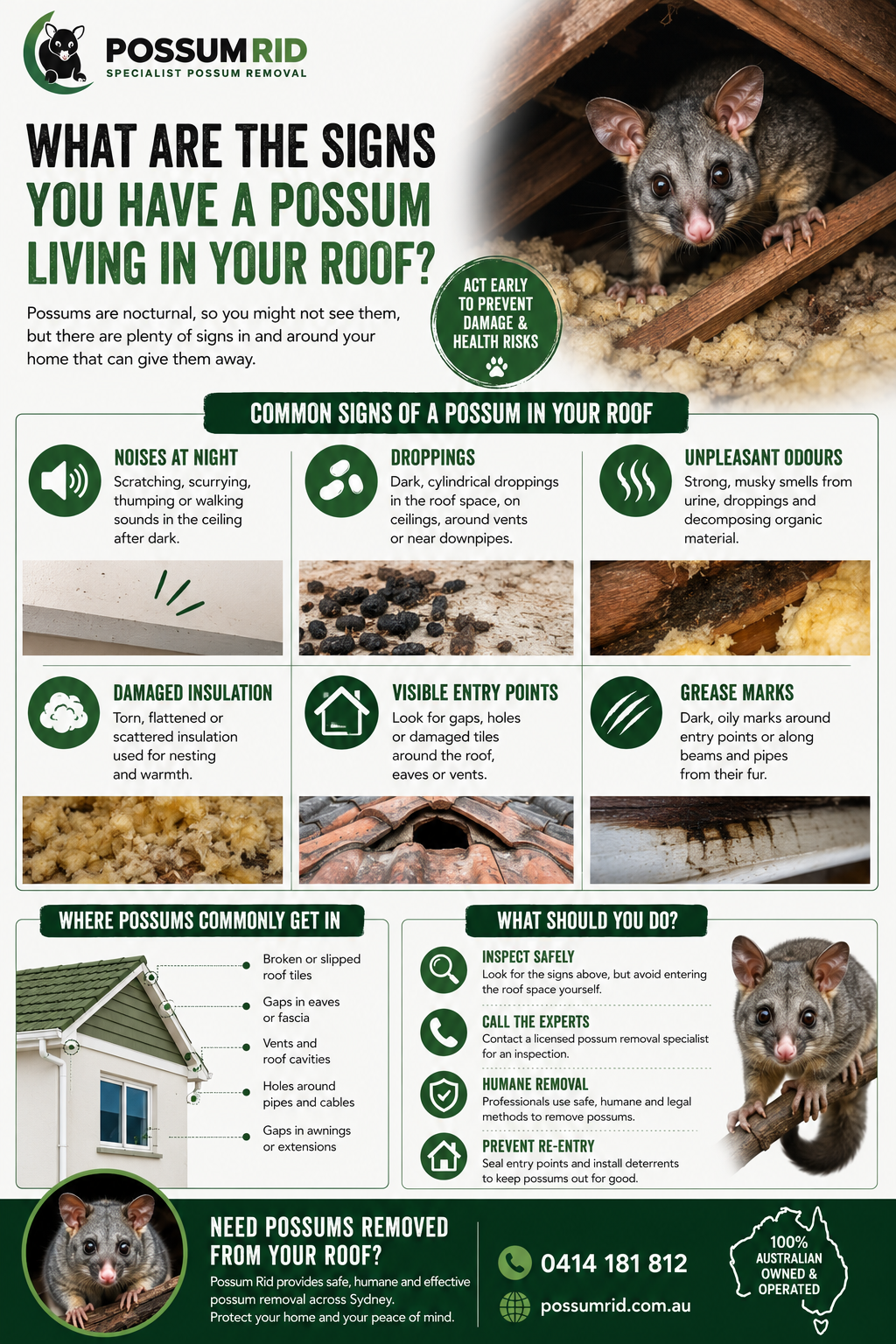
Can You See Signs Around the Outside of Your Home?
Sometimes the evidence is visible before you even hear a noise inside. Damaged or displaced roof tiles may provide an easy access point into the roof cavity, while gaps around loose eaves or fascia boards often create openings large enough for a possum to enter. Overhanging tree branches that touch your roof make it much easier for possums to climb onto the house, and dark scuff marks or scratches around roof edges can indicate repeated activity.
If you’re unsure how a possum may have entered your home, read How Do Possums Get Into Roofs? Common Entry Points in Sydney Homes to learn where they commonly gain access.
Do Possums Leave Droppings or Odours?
Yes. Like any animal living in a roof space, possums leave droppings behind — generally larger and more cylindrical than rat droppings, and usually found near nesting or resting areas. Most homeowners never actually see them, since they remain inside the roof cavity, but over time they can contribute to unpleasant smells. A possum living in the same area for an extended period may produce noticeable odours from urine, droppings and nesting materials, and this can become more noticeable where roof ventilation is limited.
Can Possums Damage Insulation?
Possums don’t usually enter a roof intending to damage property, but they can disturb materials while moving around, including flattening or displacing insulation batts, contaminating insulation with urine and droppings, and damaging flexible ducting. If left unchecked for long periods, cleaning or replacing affected insulation may become necessary. Our article Can Possums Damage Your Roof, Insulation or Electrical Wiring? explains the types of damage homeowners may experience and how professional inspections can help identify any problems.
How Can You Tell the Difference Between a Possum and a Rat?
Many homeowners initially assume they have rats, since both animals become active at night. However, there are some noticeable differences:
- Possums usually make heavier footsteps, produce louder thumping sounds, move more slowly, create larger entry points, and are more likely to vocalise.
- Rats generally move quickly with lighter scratching noises, fit through much smaller openings, leave much smaller droppings, and often remain hidden even when active.
If you’re unsure which animal has moved into your roof, our comparison guide Possum or Rat in the Roof: How Can You Tell the Difference? explains the key differences in more detail.
Should You Try to Remove the Possum Yourself?
No. Possums are protected native wildlife under NSW legislation. Attempting to trap, relocate or harm a possum yourself may not only place unnecessary stress on the animal but could also breach NSW wildlife regulations. Instead, it’s best to arrange a professional inspection so the animal can be managed lawfully and humanely.
What Should You Do If You Think You Have a Possum?
If you’ve noticed several of the signs discussed above, stay calm — possums are generally shy animals that usually avoid direct contact with people. Start by observing the activity, noting when the noises occur and whether they’re becoming more frequent, then check the outside of the house from ground level for damaged roof tiles, loose eaves or overhanging branches that could be providing access. Avoid blocking any entry point while the possum may still be inside, as this can trap the animal and create further complications. From there, the best step is to arrange a professional inspection — a licensed possum removal specialist can identify the species involved, locate entry points and recommend the most appropriate lawful solution.
Once a possum has been lawfully removed, preventing future access becomes the priority. This may involve repairing damaged roof tiles, sealing entry points, trimming overhanging branches, repairing loose eaves, and installing appropriate possum-proofing measures. Our guide How Can You Stop Possums From Returning to Your Roof? explains practical steps Sydney homeowners can take to help reduce the chances of future roof visitors.
Frequently Asked Questions
Do possums only make noise at night?
Yes. Possums are nocturnal, so they are usually active after sunset and before sunrise.
Can one possum make a lot of noise?
Absolutely. A single brushtail possum is large enough to create surprisingly loud footsteps and thumping sounds.
Will a possum eventually leave on its own?
Sometimes, but if the roof provides warmth and reliable shelter, the possum may continue returning.
Can I scare a possum away?
Temporary disturbances may encourage a possum to leave briefly, but unless the entry point is professionally addressed in accordance with NSW requirements, it may simply return.
Contact Possum Rid for Professional Possum Removal
If you’ve noticed scratching, heavy footsteps or other signs that a possum may be living in your roof, it’s best to arrange a professional inspection before the problem becomes more disruptive. Correctly identifying the animal is the first step towards choosing the right solution.
Possum Rid provides professional, humane possum removal and possum-proofing services throughout Sydney. Our experienced team can identify whether a possum is responsible, locate its entry point and recommend a lawful solution that protects both your home and Australia’s native wildlife. Learn more about our Possum Removal Sydney service or Contact Possum Rid today to arrange an inspection.