Skip to content

What Should You Do If You Hear a Possum in Your Roof at Night?
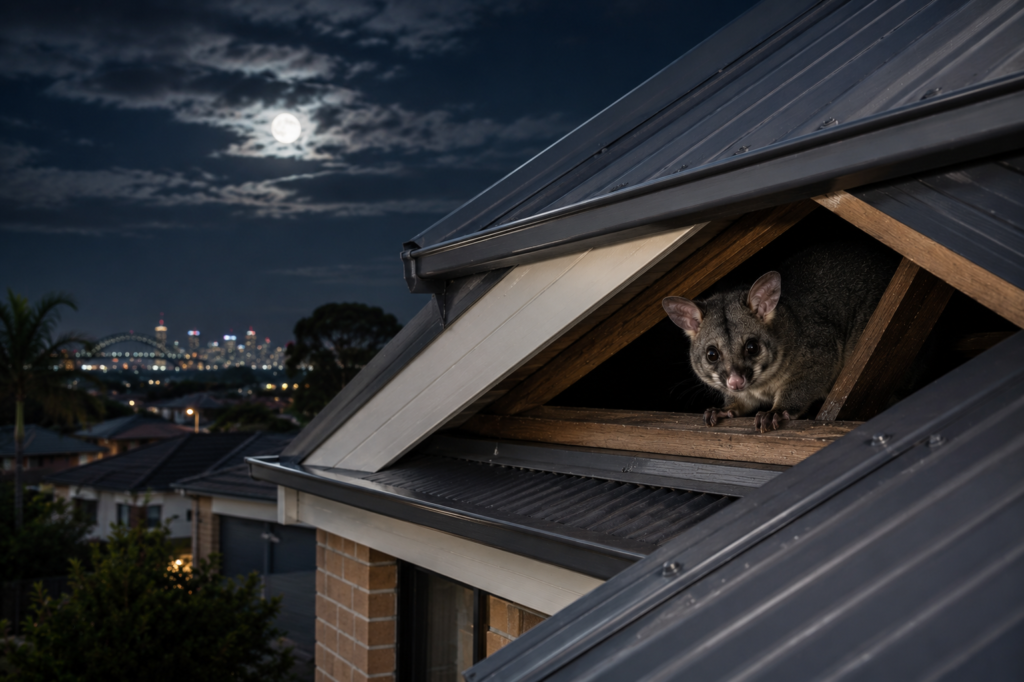
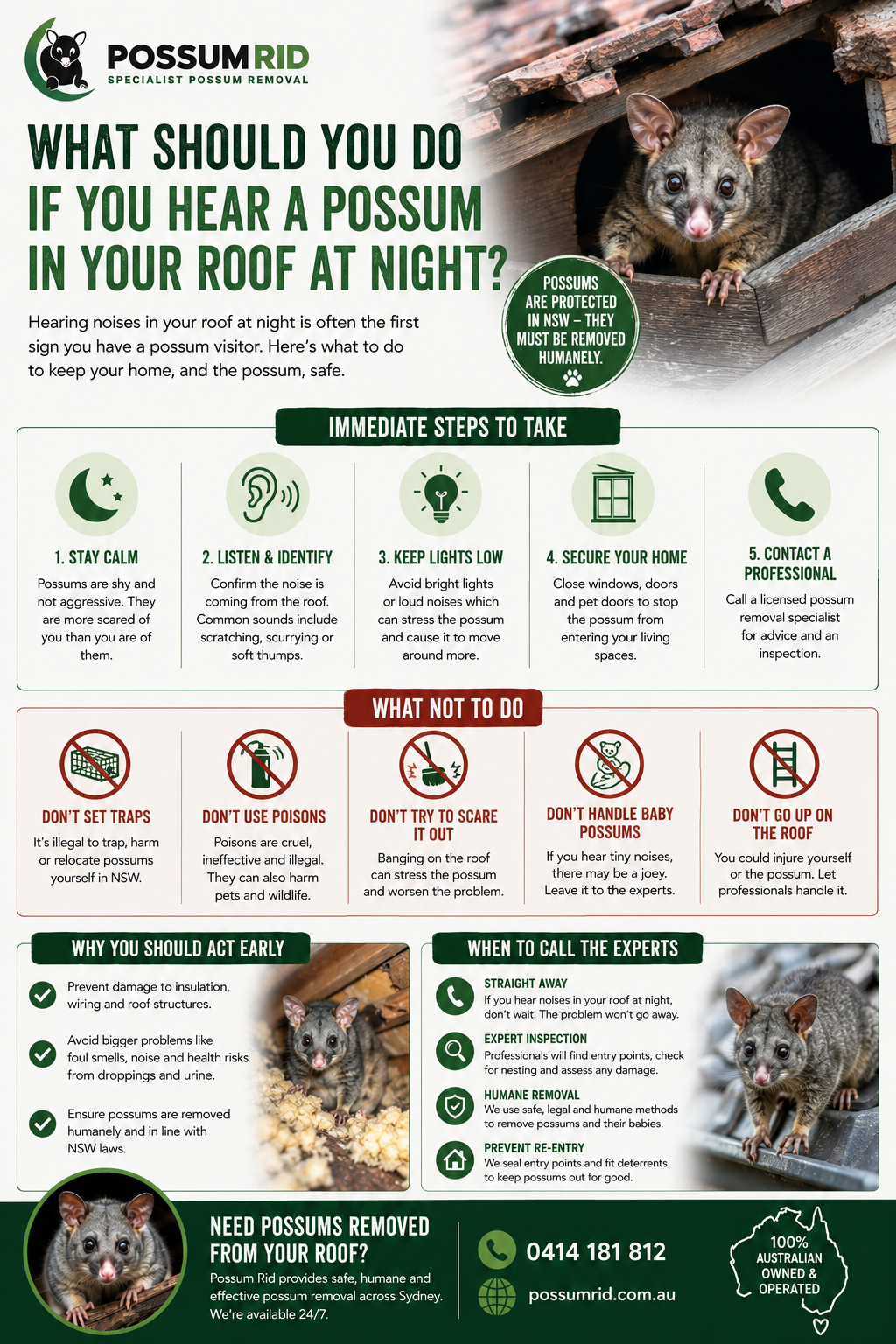
Hearing scratching, thumping, or heavy footsteps coming from your roof after dark is a common experience for many Sydney homeowners, particularly during winter. While it can be tempting to investigate immediately or block the animal’s way in, acting too quickly can sometimes make the situation worse.
If the noises are being caused by a possum, it’s important to remember that possums are protected native animals in New South Wales. The safest approach is to identify the problem, avoid harming or trapping the animal, and arrange professional assistance if required.
Is It Really a Possum in Your Roof?
Not every noise in the roof is caused by a possum. Rats, mice, birds and even tree branches rubbing against the roof during windy weather can produce similar sounds.
Possums, though, tend to make quite distinctive noises. Their footsteps are heavy and deliberate, often more like slow scratching than scurrying. They also produce loud thumps as they move between roof timbers, and this activity usually starts shortly after sunset or picks up again just before sunrise.
Occasionally you might also hear hissing, growling or coughing sounds, particularly if two possums are competing for territory. If you’re still unsure whether a possum is responsible, our guide What Are the Signs You Have a Possum Living in Your Roof? explains the most common indicators homeowners should look for.
Why Are the Noises Worse at Night?
Possums are nocturnal, meaning they sleep during the day and become active after sunset. A possum living in your roof will usually wake around dusk, leave to search for food, then return before sunrise and move around while settling back into its resting place. Because homes are generally quieter at night, these movements often sound much louder than they actually are.
Stay Calm and Look for the Signs
The first thing to do is remain calm. Although hearing loud noises overhead can be frustrating, possums are generally shy animals that prefer to avoid people and are unlikely to enter your living areas unless they accidentally become trapped or disoriented. Resist the urge to climb into the roof space or attempt to confront the animal yourself.
Before taking any action, spend a little time observing what you hear — whether the noise is heavy or light, whether it occurs every night, and whether it begins shortly after sunset and stops before daylight. Keeping track of these patterns can help confirm whether a possum is likely responsible.
It’s also worth inspecting your home from ground level for broken roof tiles, loose or damaged eaves, roof vents with visible gaps, tree branches touching the roof, or scuff marks around possible entry points, since many possums use the same access point every night. If you’re wondering where possums usually enter homes, our article How Do Possums Get Into Roofs? Common Entry Points in Sydney Homes explains the most common access routes found across Sydney properties.
Don’t Try to Chase the Possum Out
Many homeowners think making loud noises, shining lights into the roof, or banging on the ceiling will permanently scare a possum away. While this may temporarily disturb the animal, it rarely solves the problem — if the roof provides warmth and easy access, the possum will often return once things become quiet again, and repeatedly frightening it may simply add unnecessary stress without preventing future visits.
Avoid Blocking the Entry Point
One of the biggest mistakes homeowners make is sealing the entry hole as soon as they realise a possum has entered the roof. This can create serious problems if the possum is still inside — a trapped possum may search desperately for another way out, damage insulation or roofing materials while trying to escape, become distressed, or leave dependent young separated from their mother. For these reasons, entry points should only be sealed once you’re certain the possum has safely left, and any lawful exclusion process has been completed.
Never Attempt to Trap or Relocate a Possum Yourself
Possums are protected native animals under the Biodiversity Conservation Act 2016 (NSW). This means homeowners should never poison possums, harm or injure them, relocate them long distances, or use illegal trapping methods. Any removal must comply with current NSW Government requirements designed to protect native wildlife. Our article Can You Legally Remove a Possum From Your Roof in NSW? explains these legal responsibilities in more detail and outlines what homeowners can and cannot do.
Many possum calls also increase during the colder months, since roof cavities become attractive places to shelter from the cold. If you’ve only recently started hearing noises, winter may be the reason — our article Why Do Possums Move Into Sydney Roofs During Winter? explains why possum activity often increases at this time of year.
Arrange a Professional Inspection
If the noises continue for several nights, it’s worth arranging a professional inspection. An experienced possum removal specialist can confirm whether the animal is a possum, identify entry points, check whether a mother has dependent young, recommend the most appropriate lawful removal method, and advise on preventing future access. Professional inspections also help rule out other wildlife such as rats or birds — if you’re uncertain which animal has entered your roof, our comparison guide Possum or Rat in the Roof: How Can You Tell the Difference? covers this in detail.
What Happens During Professional Possum Removal?
Many homeowners are unsure what to expect. Professional possum removal generally involves:
- Inspecting the roof – the roof and exterior of the property are carefully examined to locate entry points and determine where the possum is sheltering
- Identifying the species – correct identification matters, as different animals require different management approaches
- Lawful removal or exclusion – where appropriate, the possum is removed or excluded using methods that comply with NSW wildlife regulations
- Sealing entry points – once it’s safe to do so, access points can be repaired or sealed to reduce the chance of future visits
If you’re interested in how this process works, our guide How Are Possums Removed From a Roof Without Harming Them? explains each stage in more detail.
How Can You Stop the Possum Coming Back?
Once the possum has been removed, preventing re-entry becomes the priority. Trimming branches away from the roof, repairing broken roof tiles, replacing damaged eaves, securing roof vents, repairing loose fascia boards and arranging professional possum-proofing all help close off access. Without addressing the original entry point, the possum — or another possum — may eventually return. Our article How Can You Stop Possums From Returning to Your Roof? provides additional practical advice for keeping your roof less attractive to wildlife.
Frequently Asked Questions
Should I go into the roof to investigate?
It’s generally best not to. Roof spaces can present safety hazards, and disturbing a possum may increase stress for the animal.
Can I scare the possum away with lights or noise?
Temporary disturbances may cause the possum to leave briefly, but they rarely prevent it from returning if access remains available.
Should I seal the hole as soon as the possum leaves?
Not immediately. The roof should only be sealed once you’re certain the possum has permanently left and any lawful removal or exclusion process has been completed.
Will the possum eventually leave on its own?
Sometimes. However, if your roof continues to provide warmth, shelter and easy access, it may return night after night.
Contact Possum Rid for Professional Possum Removal
If you’re hearing scratching, heavy footsteps or thumping in your roof after dark, don’t ignore the problem or attempt to deal with it yourself. Correctly identifying the animal and managing it in accordance with NSW wildlife laws is the safest approach for both your home and the possum.
Possum Rid provides professional, humane possum removal and possum-proofing services throughout Sydney. Our experienced team can inspect your roof, identify the source of the noise and recommend a lawful solution that helps prevent future problems. Learn more about our Possum Removal Sydney service or Contact Possum Rid today to arrange a professional inspection.