Skip to content


Possum or Rat in the Roof: How Can You Tell the Difference?
Hearing scratching or movement in your roof at night can leave you wondering what’s causing the noise. For many Sydney homeowners, the first assumption is that rats have moved into the roof cavity. However, it’s not uncommon for the culprit to be a possum instead.
Although both animals are active after dark, they behave very differently and often leave different clues behind. Knowing whether you’re dealing with a possum or a rat matters, because the way each is managed is completely different — rats are considered pests, while possums are protected native animals under NSW law.
Why Is It Important to Identify the Animal?
Correctly identifying what’s living in your roof helps ensure the right solution is used. Possums and rats enter roofs in different ways, make different types of noises, leave different evidence behind, require different removal methods, and are covered by entirely different legal requirements. If you’re unsure which animal has moved in, a professional inspection can usually identify the species quickly and recommend the most appropriate course of action.
What Do Their Sounds Have in Common — and How Do They Differ?
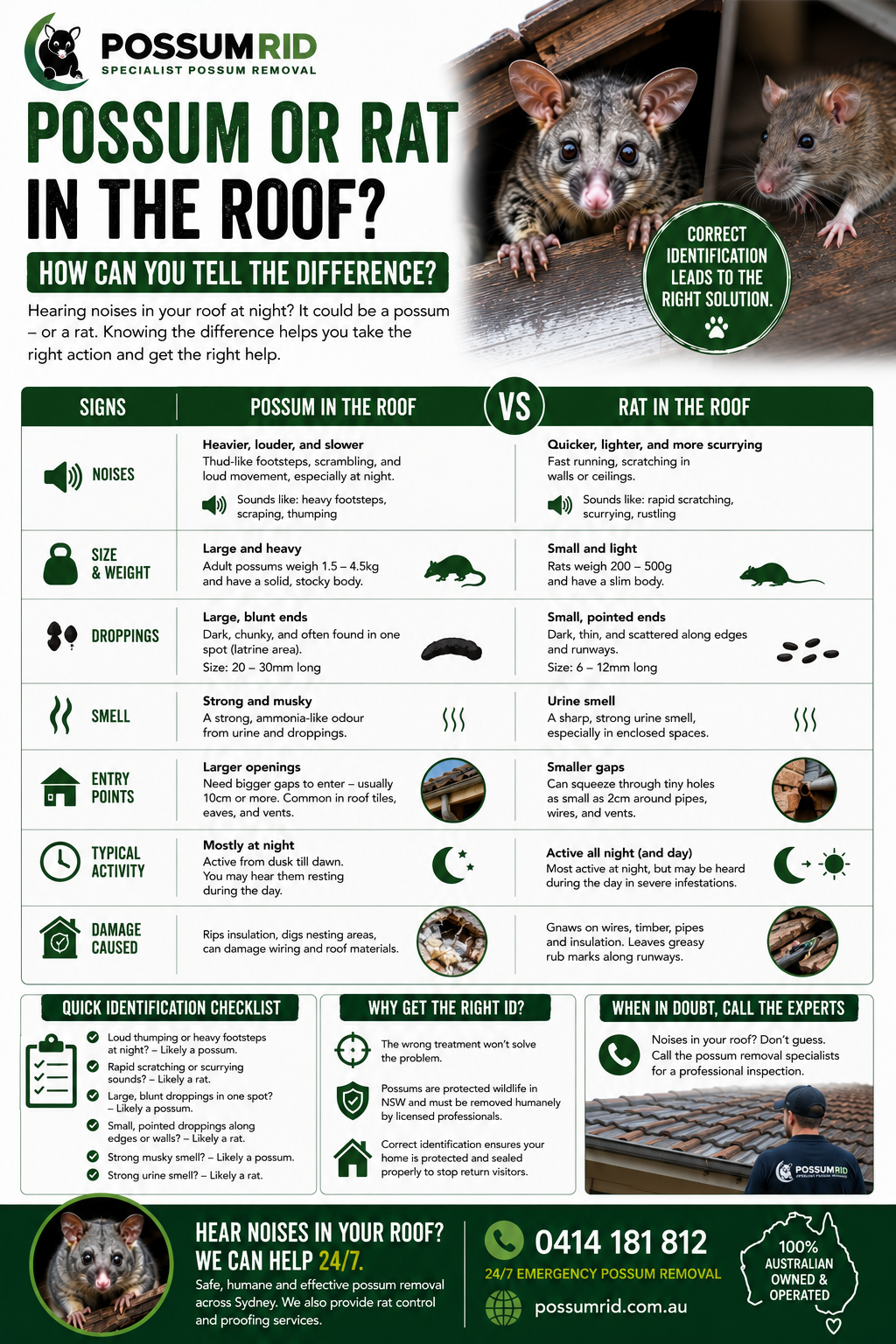
Possums are much larger than rats, so the noises they make are usually louder and heavier:
- Possums – heavy footsteps across the ceiling, slow scratching sounds, loud thumps as the animal moves between roof timbers, scraping near entry points, and occasional hissing, growling or coughing. It often sounds like someone walking across the roof.
- Rats – light scratching, fast scurrying, quick running between wall cavities, gnawing sounds and soft squeaking. Because rats are much smaller, they rarely produce the heavy thumping associated with possums.
If slow footsteps, heavy bumps or distinct thuds are what you’re hearing, a possum is generally more likely; light scratching, quick scurrying or constant running points more towards rats. If you’ve been hearing possum-like sounds specifically, What Are the Signs You Have a Possum Living in Your Roof? explains the other common indicators that suggest a possum may be living above your ceiling.
How Do Their Activity Patterns Compare?
Both animals are primarily nocturnal, but their patterns differ. Possums usually become active shortly after sunset, leave the roof to feed, return before sunrise, and spend most of the day sleeping — their activity tends to follow predictable periods in the evening and early morning. Rats, on the other hand, may remain active throughout the entire night, moving back and forth while searching for food, and can even become active during quiet periods of the day if they feel safe.
Can You Tell by Looking at the Droppings?
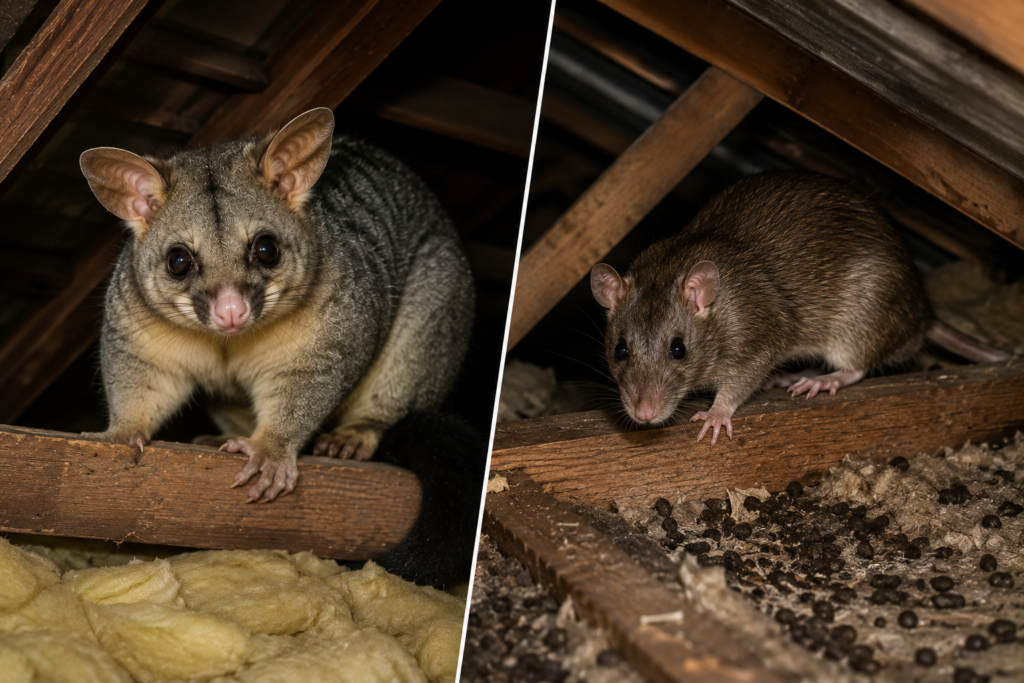
Sometimes. Possum droppings are generally larger, cylindrical, and often found near resting areas, while rat droppings are much smaller, darker, more numerous, and commonly found near food sources or travel routes. Because droppings are usually located inside the roof cavity, homeowners often don’t see them until a professional inspection takes place.
How Do They Get Into the Roof?
Possums and rats can sometimes use the same access points, but they usually reach them differently:
- Possums – commonly enter through broken roof tiles, damaged eaves, roof vents, gaps around flashing, or loose fascia boards, typically climbing trees, fences, pergolas or downpipes to reach the roof. Our article How Do Possums Get Into Roofs? Common Entry Points in Sydney Homes covers this in more detail.
- Rats – can squeeze through very small gaps, wall cavities, plumbing penetrations, gaps beneath roofing materials, or openings around utility pipes. Because rats need far smaller openings, homes that appear well sealed may still be vulnerable.
Do They Cause Different Types of Damage?
Yes. Possums may flatten insulation, contaminate it with urine and droppings, damage flexible ducting, dislodge roof insulation, or disturb materials around entry points — our article Can Possums Damage Your Roof, Insulation or Electrical Wiring? explains this further. Rats, by contrast, are more likely to gnaw timber, chew plastic materials, damage stored items, contaminate roof spaces, and chew electrical wiring. Although both animals can affect roof spaces, the type of damage they leave behind is usually quite different.
Which Animal Is More Likely During Winter?
Possums become particularly noticeable during winter, since roof cavities provide warmth and shelter, and many Sydney homeowners first notice possum activity as temperatures begin to fall. If you’ve recently started hearing noises during colder weather, Why Do Possums Move Into Sydney Roofs During Winter? explains why winter is one of the busiest times of year for possum activity. Rats remain active throughout the year but don’t generally show the same seasonal increase in roof activity.
Can You Remove Them the Same Way?
No — this is one of the biggest differences between the two. Possums are protected under the Biodiversity Conservation Act 2016 (NSW), so their removal must comply with NSW wildlife laws, and homeowners should never attempt to trap, relocate or harm them. Our guide Can You Legally Remove a Possum From Your Roof in NSW? explains these legal requirements in more detail. Rats, on the other hand, are pest animals managed using completely different methods. Because the legal obligations differ so much, correctly identifying the animal before taking any action is essential.
What Should You Do If You’re Not Sure?
If you can’t confidently identify the animal, it’s best not to make assumptions. Listen carefully to the type of noise, note when the activity occurs, and inspect your roof from ground level for obvious entry points. Avoid sealing any holes until the animal has been identified, and arrange a professional inspection if the activity continues. If the noises are keeping you awake, What Should You Do If You Hear a Possum in Your Roof at Night? explains the safest first steps while you arrange professional assistance.
Professional help is worth arranging if the noises continue for several nights, you can’t identify the animal, you suspect a possum is involved, you notice damage around the roof, or you simply want to prevent future access. A professional inspection can identify the species, locate entry points, and recommend the most appropriate solution for your property.
Frequently Asked Questions
Can a possum sound like a rat?
Sometimes, particularly if the possum is moving slowly. However, possums generally create much heavier footsteps and louder thumping sounds than rats.
Which animal is more likely to damage electrical wiring?
Rats are far more likely to chew electrical wiring, since their teeth grow continuously and they regularly gnaw hard materials.
Are possums bigger than rats?
Yes. Adult brushtail possums are considerably larger than roof rats, which is why their movements sound much heavier.
Should I treat the problem as rats until I know for sure?
No. If a possum is involved, different legal requirements apply, so correct identification should always come before deciding how the animal will be managed.
Contact Possum Rid for Professional Roof Inspections
If you’re hearing scratching, thumping or movement in your roof but aren’t sure whether it’s a possum or a rat, a professional inspection can provide the answer. Correct identification is the first step towards choosing the right solution and avoiding unnecessary damage or legal issues.
Possum Rid provides professional possum inspections, humane possum removal and possum-proofing services throughout Sydney. Our experienced team can identify the source of the noise, locate roof entry points and recommend a lawful solution if a possum is involved. Learn more about our Possum Removal Sydney service or Contact Possum Rid today to arrange an inspection.